
 Hitarth Chudgar
Guest Pass System
How we turned outdated guest access workflows into a scalable, revenue-generating system for Condos and HOAs — designed to reduce friction, restore fairness, and help communities function like communities again.
Context Setting
| Aspect | Details |
|---|---|
| Project Duration | February 2025 — May 2025 (3 months) |
| Team | Product Manager, Engineers, Property Managers, Resident Committees |
Shared living communities are complicated. Expectations for fairness, access, and transparency keep rising, but most of the systems meant to manage those spaces feel stuck in the past. For board members, staff, and residents, this creates tension in the small, everyday moments that shape shared living — especially around guest access. Old tools, unclear rules, and inconsistent processes turned what should be simple into a daily friction point.
Residents
Expectations for fairness, access, and transparency have never been higher
Staff
Limited tools, inconsistent processes, and high emotional labor
Board Members
Strained by outdated systems, reactive governance, and limited flexibility
Economics of Shared Living
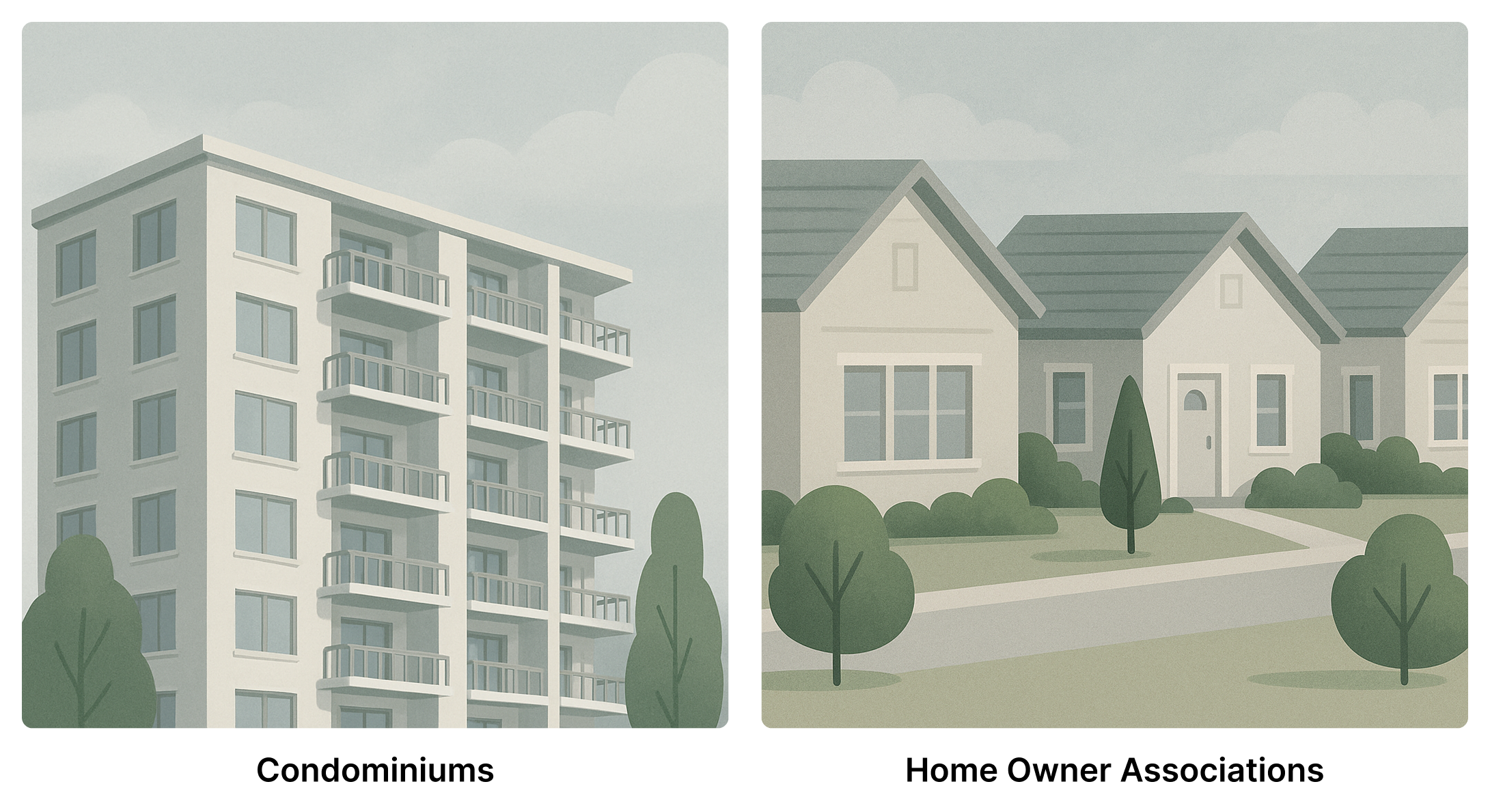
From high-rise condos to gated HOAs, property managers are in charge of far more than buildings. They're stewards of shared environments. And these environments are complex—physically, financially, socially. They manage not just the upkeep of property but the dynamics of people sharing space.
They're expected to:
Manage fair access to shared spaces
Pools, clubhouses, gyms, BBQ areas, guest parking — amenities need structure to stay usable and fair
Reduce daily conflict for residents and staff
Prevent monopolized spaces, reduce misunderstandings, and replace improvisation with clear processes
Balance diverse community expectations
Give residents predictable rules while keeping access inclusive and adaptable across different living styles
Empower staff without overburdening them
Equip teams with tools to manage access, enforce policies, and resolve disputes — without relying on guesswork
Yet their toolkit often lacks one crucial component: adaptive control. The ability to apply nuanced, seasonal, and situation-aware rules in ways that feel transparent and just.
Legacy Revenue Models, Modern Headaches
Most boards depend on conventional income sources:
- Monthly assessments
- Parking and storage rentals
- Move-in/move-out fees
- Vendor advertising
- Rule enforcement fines
These income sources offer predictability but don't scale well with usage, don't adjust to shifting demand, and don't respond to behavioral dynamics. They also offer few levers to influence resident behavior in more nuanced ways.
As resident lifestyles shifted to remote work it lead to higher guest turnover, and amenity congestion. These older models showed strain. Boards needed new mechanisms not just to fund maintenance, but to guide usage, reduce friction, and respond to real-world patterns.
The Guest Access Spiral
Friction around guest access wasn't new. Sales flagged overcrowded pools. Customer success heard frustrations from residents. Marketing saw the same themes emerge in surveys and webinars. But these signals only scratched the surface. We needed to understand how guest access played out day-to-day; and how residents, staff, and boards managed it with the tools they had.
We started asking questions, informally at first.
One manager pointed to a clipboard. Another showed us a spreadsheet with 400+ rows. A third admitted there was no system at all — "we go on gut feel."
Staff described constant improvisation. One concierge summed it up: "I spend more time decoding arguments than checking in guests."
Boards worried that setting hard limits would cause backlash. But the frustration wasn't with structure, it was with uncertainty. Residents didn't mind rules. They minded when boundaries felt invisible, inconsistent, or unfair.
Without structure, trust broke down:
Staff
Left to improvise decisions without clear guidelines
Residents
Guessing why some guests were turned away while others weren't
Amenities
Spaces overbooked, monopolized, or neglected
Tensions
Growing friction between residents, staff, and boards
Every summer, it got worse. Guest spikes revealed how brittle and reactive the existing systems were. We needed to move beyond anecdotes and map the root causes.
Discovery
That's where we focused next — not on shipping features, but understanding the system beneath the system.
Our team:
- Conducted on-site visits
- Shadowed concierge teams
- Sat in board meetings
- Led resident interviews
We mapped behaviors, building rules, operations, and the unofficial workarounds holding everything together. The problem wasn't just policies. It was improvised systems masking deeper behavioral gaps.
Emerging patterns:
Residents
Most conflicts stemmed from unclear rules, not bad intent
Staff
Lack of visibility led to second-guessing and frustration
Boards
Residents wanted predictability, staff wanted consistency, boards needed legitimacy
This led us to a focused challenge:
How might we build an access system that turns ambiguity into agency for residents, staff, and decision-makers alike?
Prototyping for Power and Clarity
We translated our research into lightweight prototypes. These weren't polished flows. They were provocations:
- Could a resident invite a guest in under a minute?
- Could a staff member verify access with no clipboard, no drama?
- Could boards apply seasonal rules without calling IT?
We ran these through small-group testing and live shadow sessions. Many failed:
- Barcode passes were awkward to scan and easy to fake
- Admin approvals bottlenecked the process
- SMS links were often missed or misrouted
One pattern kept showing promise: a self-service system that made limits visible and verifiable.
Residents
Residents saw what was allowed—before acting
Guests
Guests were linked to units via QR codes with expiry logic
Staff
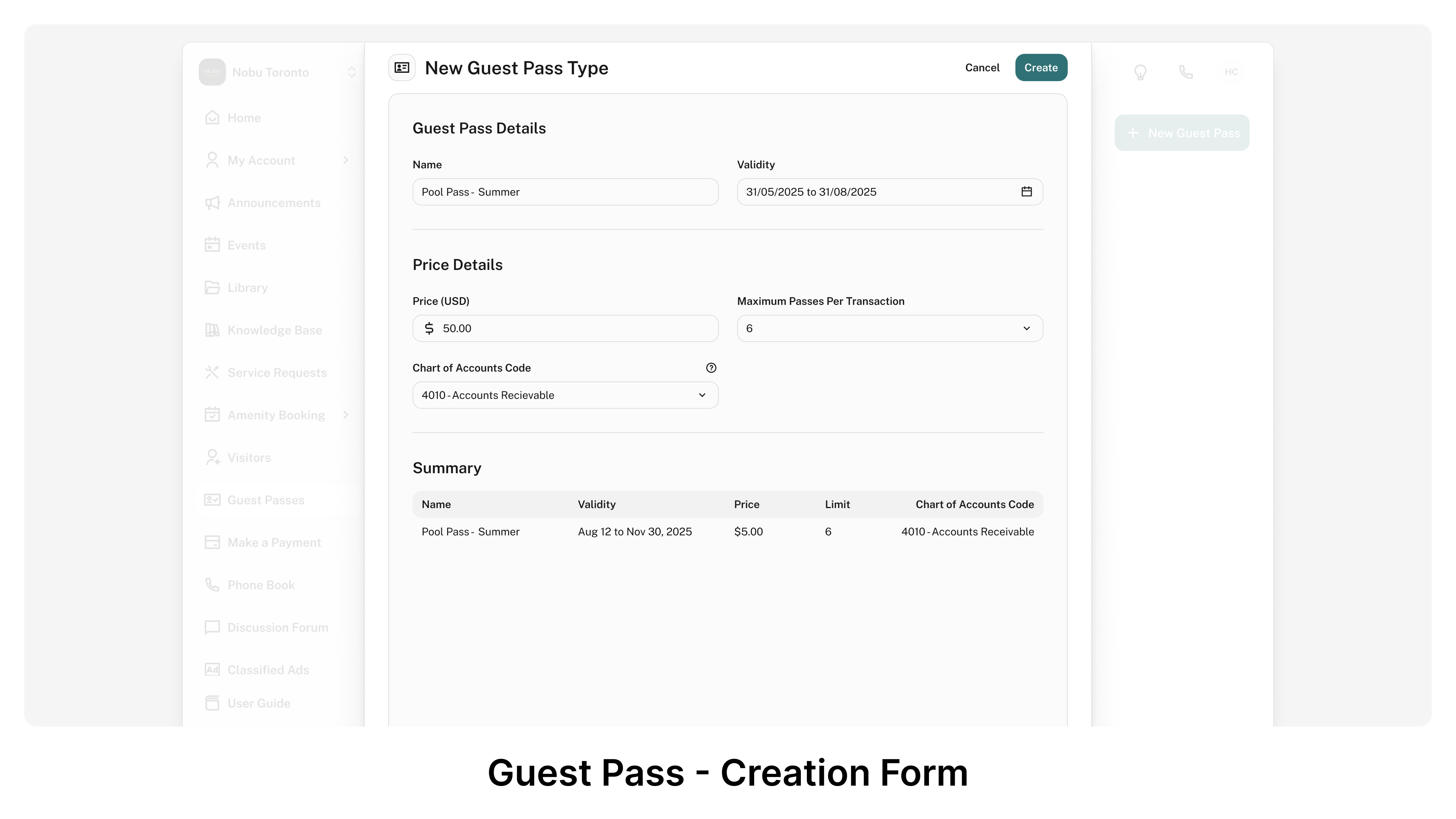
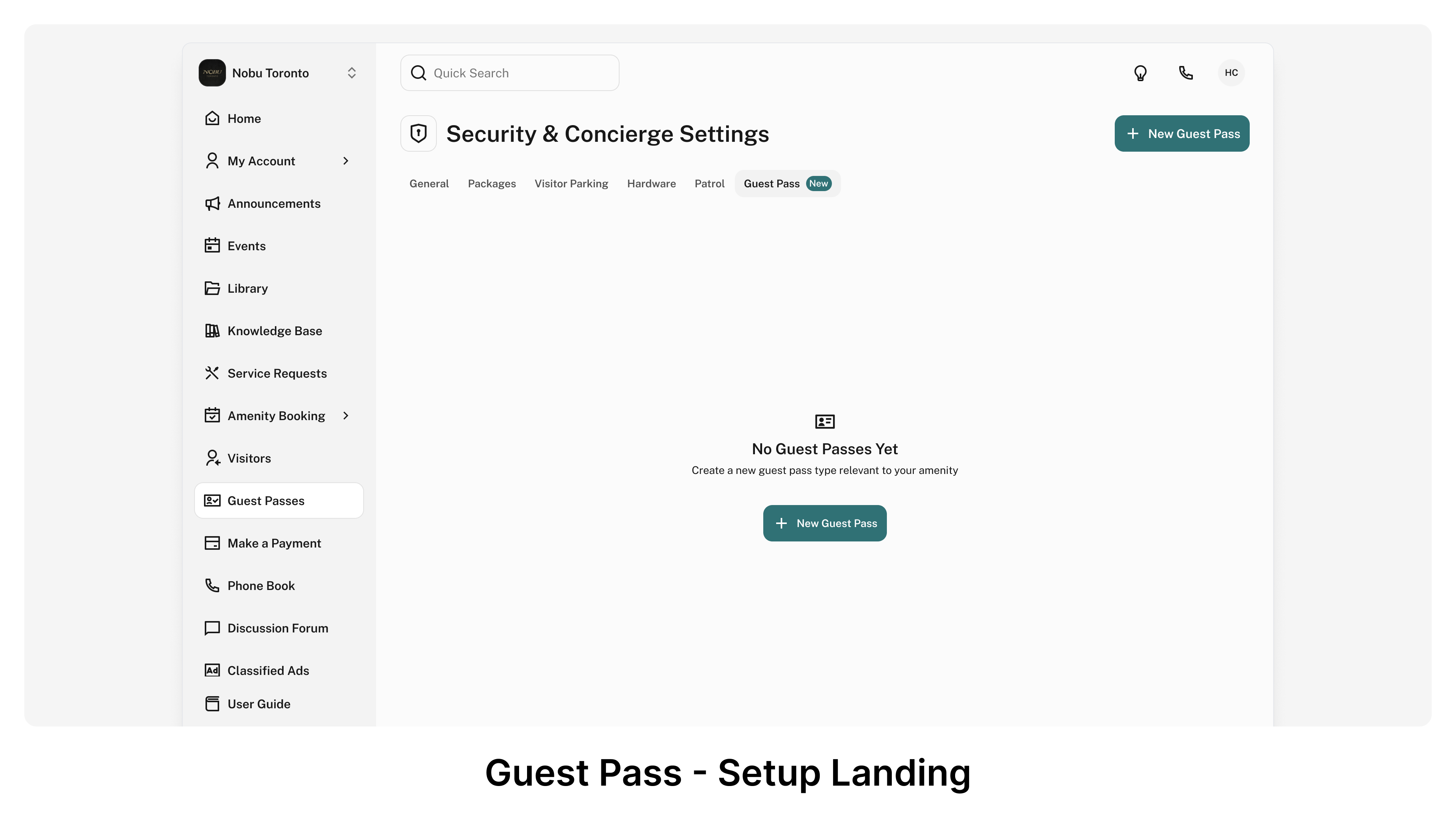
Admins could define parameters without technical help
Boards
Boards could apply seasonal rules without calling IT
Key Product Elements
Resident Experience
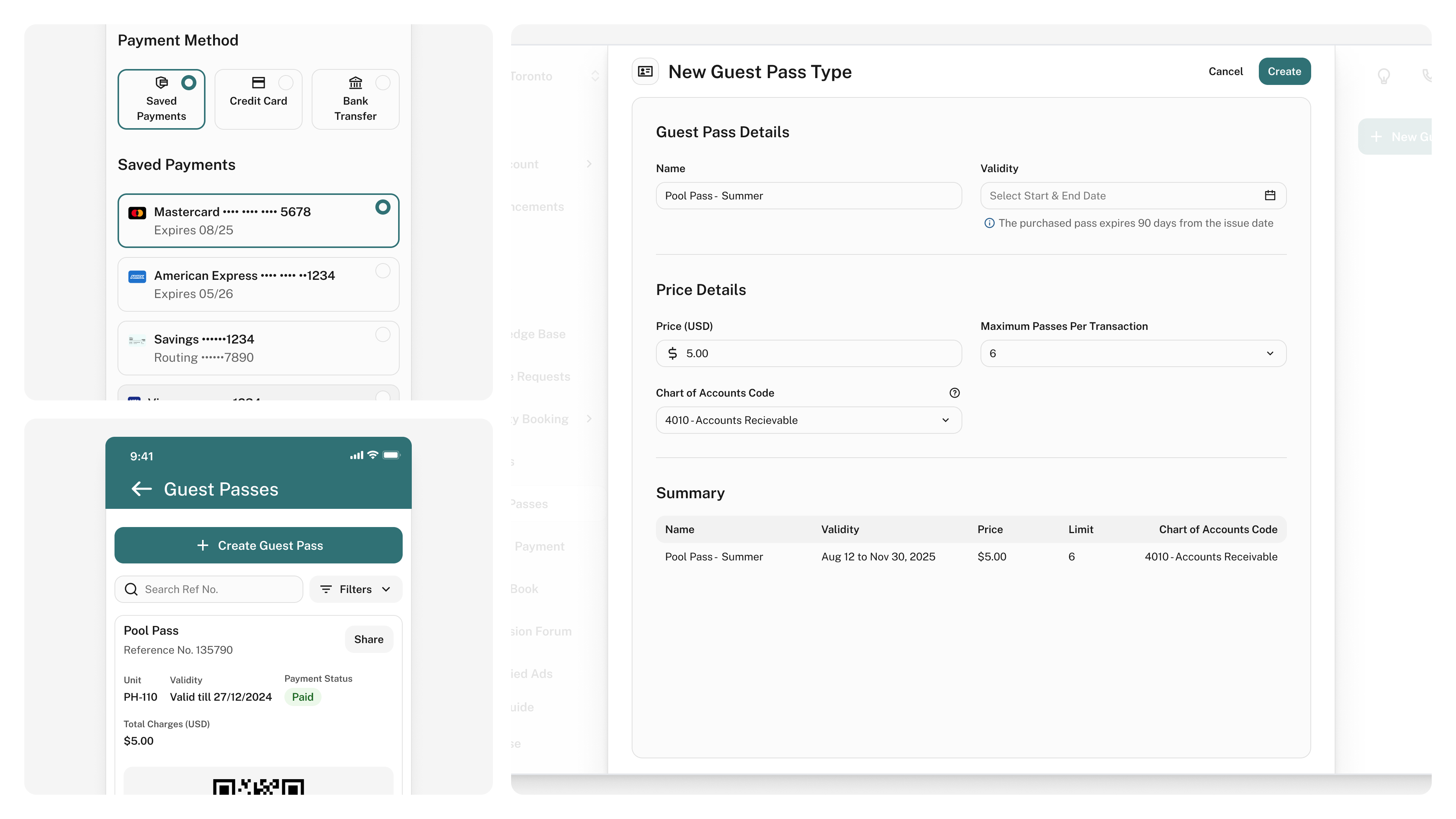
Digital passes, visible limits, QR-based check-ins
Admin Toolkit
Rule creation, peak-hour fees, abuse prevention
Cross-System Cohesion
Integrated logs, expiring passes, usage insights
This ecosystem turned rules into understandable narratives.
Pilot Launch
We ran a structured 6-week pilot across three distinct property types:
Urban High-Rise
Concierge and staffed amenities
Suburban HOA
Seasonal recreational facilities
New Build Condo
No existing infrastructure or policies
Each site brought different challenges: high volume, limited staff, no precedent for digital systems. We needed to test not just whether the system worked—but whether it scaled with complexity.
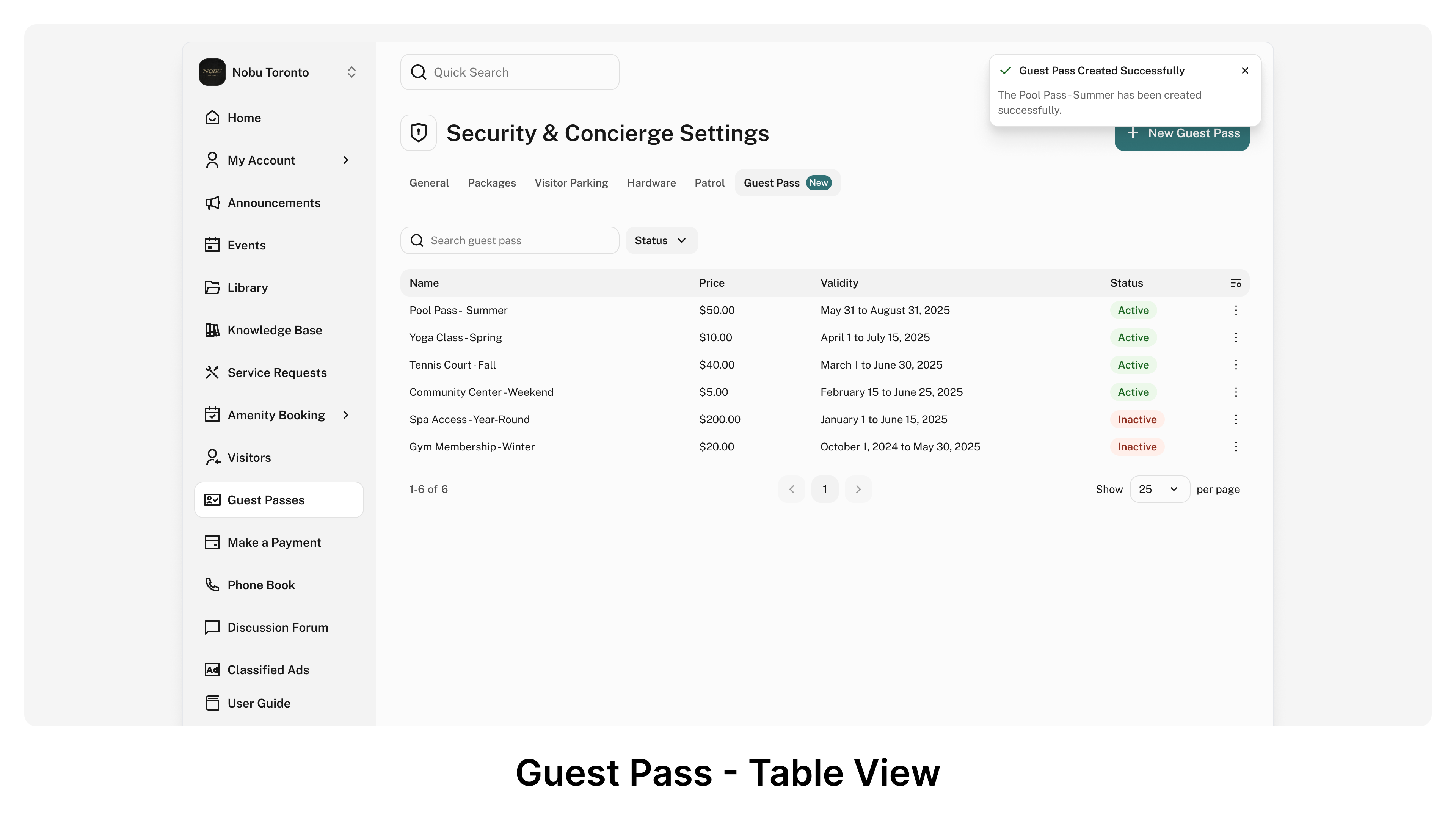
What We Measured
- Average time to create and share a guest pass
- Errors and edge cases in QR scanning and pass recognition
- Staff onboarding time and error rate
- Resident sentiment around new rules and transparency
- Willingness to pay nominal fees for better-managed amenities
Key Insights
Clarity
Clarity trumped convenience. Residents preferred extra taps if it meant fewer surprises
Micro-fees
$2–$5 filtered out impulsive usage but didn't hinder legitimate visits
Staff Trust
Staff trust in the system was the strongest predictor of long-term adoption
In post-pilot surveys, over 70% of residents said they were more likely to use amenities "if the rules were clear and enforced fairly." For boards, the pilot offered a model for smarter governance that didn't rely on constant oversight.
What We Shipped
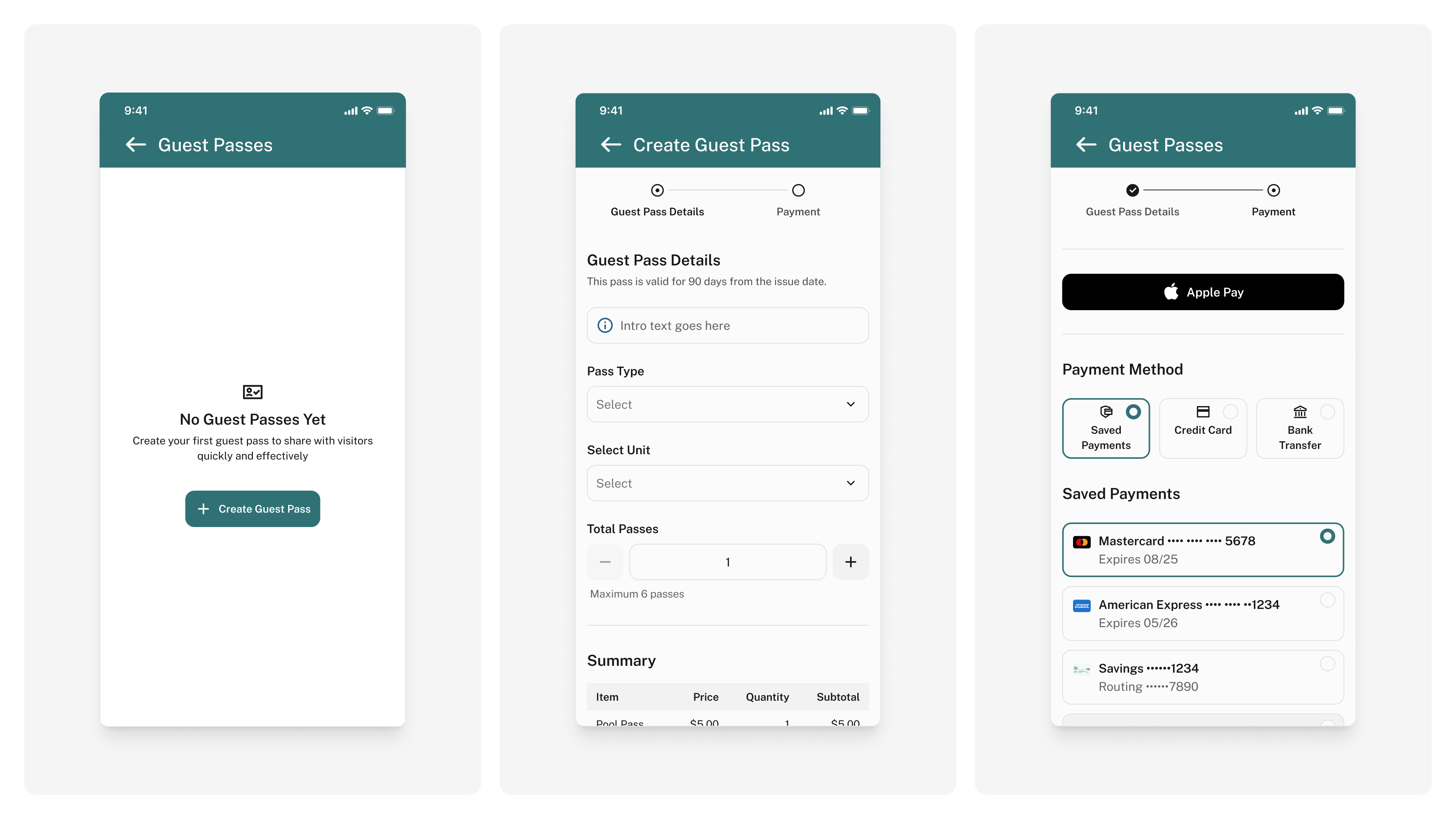
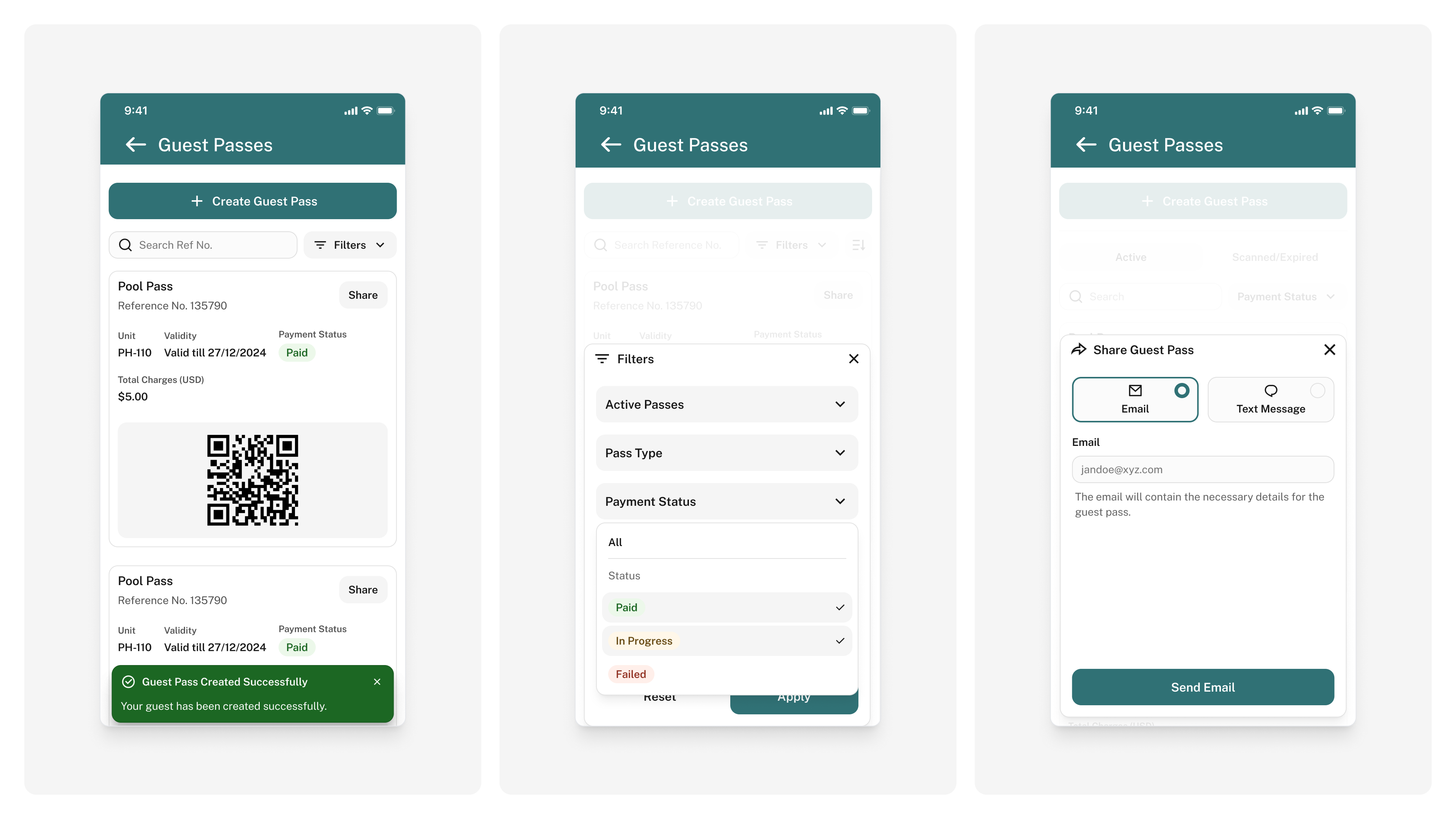
See the guest pass system in action: Guest Passes: Creating & Sharing Passes - Resident Video Guide
"It's rare to launch a feature that's simple, fair, and revenue-generating. This one did all three."— Board President, New Jersey
Tangible Gains
In just 6 weeks, these results reflect median improvements per building or HOA based on the pilot:
- 23% increase in digital guest pass usage
- Over $1,250 in monthly revenue from amenity access fees
- 38% reduction in manual guest management time by staff
- 80% satisfaction among residents using the new access experience
Broader Operational Impacts
Residents
Peace of mind about how many guests they could bring and a system that felt fair
Boards
A flexible lever to manage peak usage and get other data insights
Staff
Less emotional labor and more time to focus on service
What We Learned and What's Next
What started as a cross-functional investigation evolved into a platform for behavioral design.
This project answered a larger question: How can governance in residential communities feel less like enforcement and more like collaboration?
The results speak for themselves: lower stress, higher satisfaction, better outcomes—and a path forward for rethinking how communities design their everyday systems.